Photography
Argentina
Los Gauchos
Photography Series
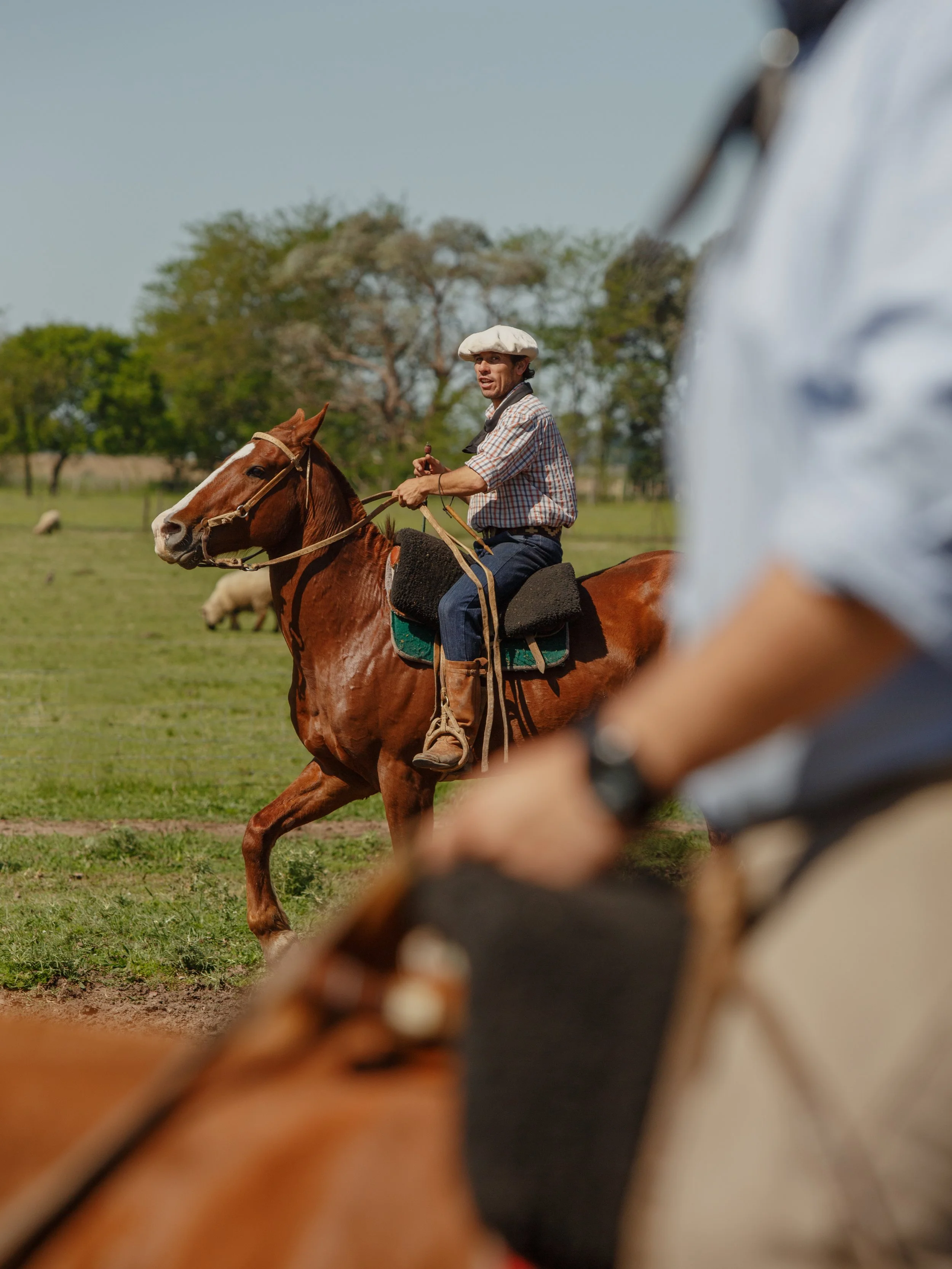
The gauchos of Argentina emerged through work, movement, and necessity. Skilled horsemen shaped by life on the open plains, they lived largely beyond formal structures, moving between ranches and regions as labour demanded.
Their way of life developed in the margins of a changing society, gaining recognition during the eighteenth and nineteenth centuries.


A Lived Culture
Often described as mestizos, formed through European and Indigenous lineage, gauchos came to hold a lasting place within Argentine cultural memory. Their identity was carried through daily rhythms of labour, horsemanship, storytelling, and music, shaped by an intimate relationship with land and animals. Knowledge was passed through observation, repetition, and oral tradition, allowing culture to endure through action rather than record.
Life on the pampas required adaptability, skill, and self-reliance. Over time, these qualities became inseparable from how gauchos were understood as people shaped by movement and environment. Their cultural significance continues to rest in this way of living, where identity is formed through what is done, how land is worked, and how meaning is carried forward through shared experience.